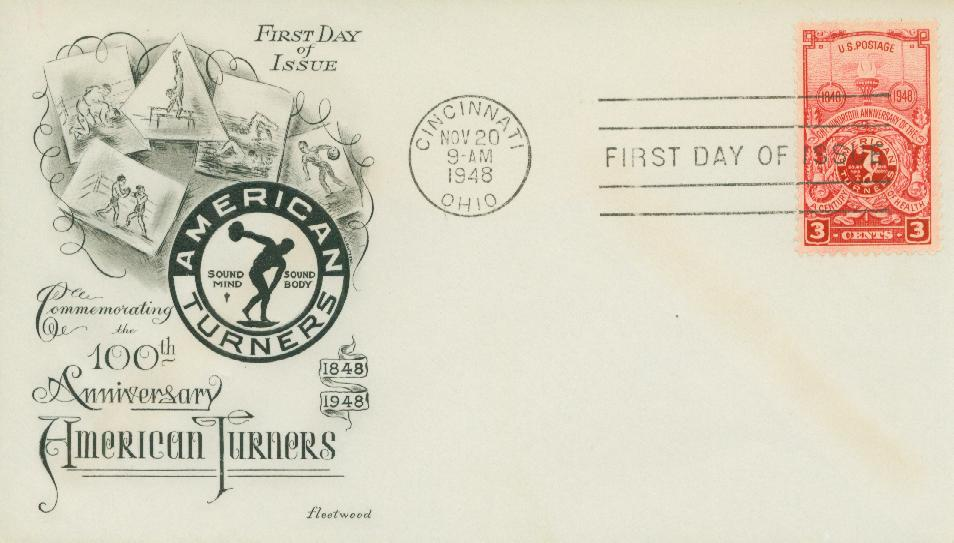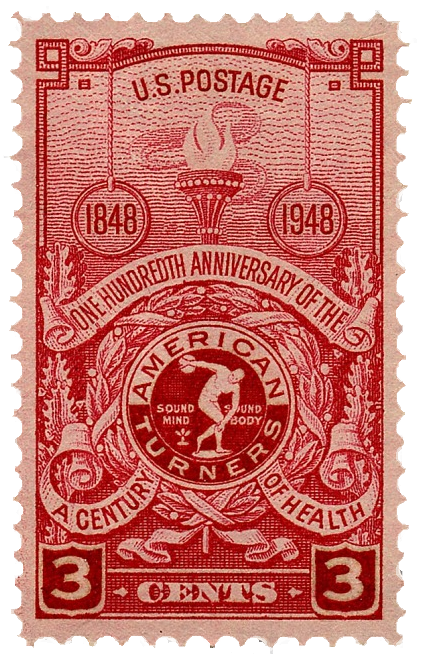
In the late 1930s, the leadership of the American Turners had a growing concern about the German heritage of the organization. There were new generations that no longer had strong ties to the country of their parents. In addition, the 1936 formation of the pro-Hitler German American Bund cast a shadow over the Turners.
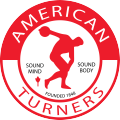
In 1938, the ntional convention took a momentous step and changed the name of the organization and promoted a new slogan, “Turnerism is Americanism.”
To help publicize and popularize the transformation, the National Executive Committee created a host of AT related merchandise featuring the logo with the discus thrower. This widely-distributed catalogue included this advice:
PRACTICAL SUGGESTIONS ON HOW TO USE THE AMERICAN TURNER PROMOTIONAL SUPPLIES
1. When used as prizes for a Membership Drive, place items to be offered in a glass case somewhere so that all of your members will be attracted to the case.
2. To be used as a stimulus to increase inter-society activities.
3. Particularly suited to increase the enrollment of gymnasium classes.
4. To be used as recognition awards for services rendered by Turners in their leadership in Society, Group Work, and Class Activities.